The January survey conducted by the Public Opinion Research Center of the Czech Academy of Sciences included a set of questions focused on the position and role of the President of the Czech Republic. Respondents expressed their opinions on the method of electing the president, the type of person they consider most suitable for the office of president, and the president's involvement in solving specific problems.
Opinions were also sought on the president's position vis-à-vis the government, his role in appointing the government, and whether he should have the right to refuse to appoint a minister proposed by the prime minister. Last but not least, the Czech public also assessed the position and degree of involvement of the president in foreign policy.
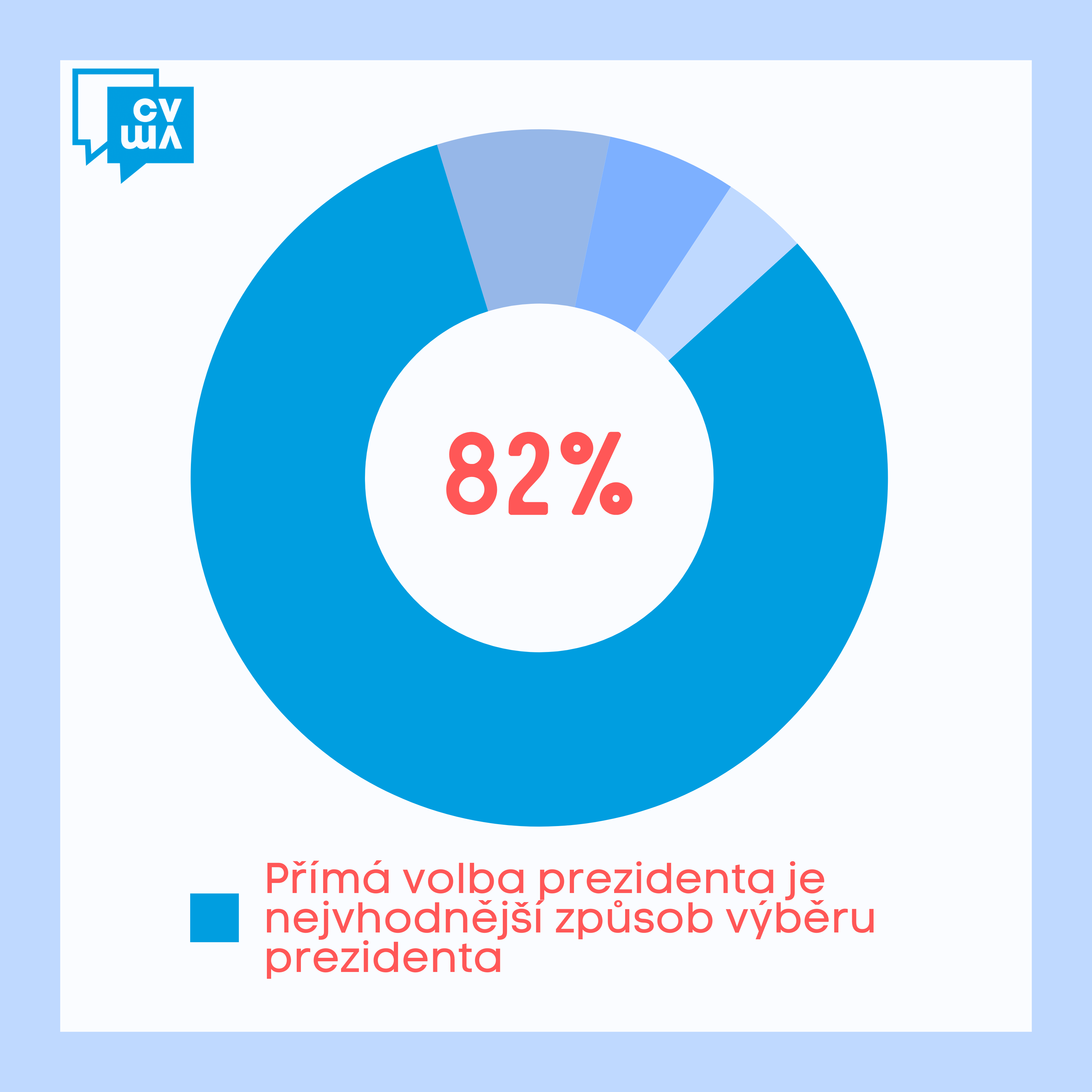
The Czech public perceives direct presidential elections as the most appropriate way to select a president, with more than four-fifths of citizens (82%) supporting this method.
Approximately half (48%) of the Czech public agrees that it does not matter whether a candidate is currently involved in politics, has been involved in the past, or has never been involved in politics in order to perform the duties of president.
Almost three-fifths (58%) of citizens believe that the president should intervene in the activities of the government, but only to a limited extent. Less than a third (31%) of citizens believe that the president should not intervene in the activities of the government at all.
More than half (57%) of the Czech public believe that the president should appoint ministers on the recommendation of the prime minister. More than a quarter (28%) believe that the president should appoint ministers at his or her own discretion.
Just under two-thirds (65%) of Czechs believe that the president should have the right to refuse to appoint a minister proposed by the prime minister only in exceptional cases, while 17% believe that he should never have this right.
>> Fulltext is available in Czech only <<






 PRINCIPAL WEBDEV